Alya Sometimes Hides Her Feelings in Russian, Vol. 1
English-language paperback published by Yen On. This is the first volume of the source light novel, not an anime disc.
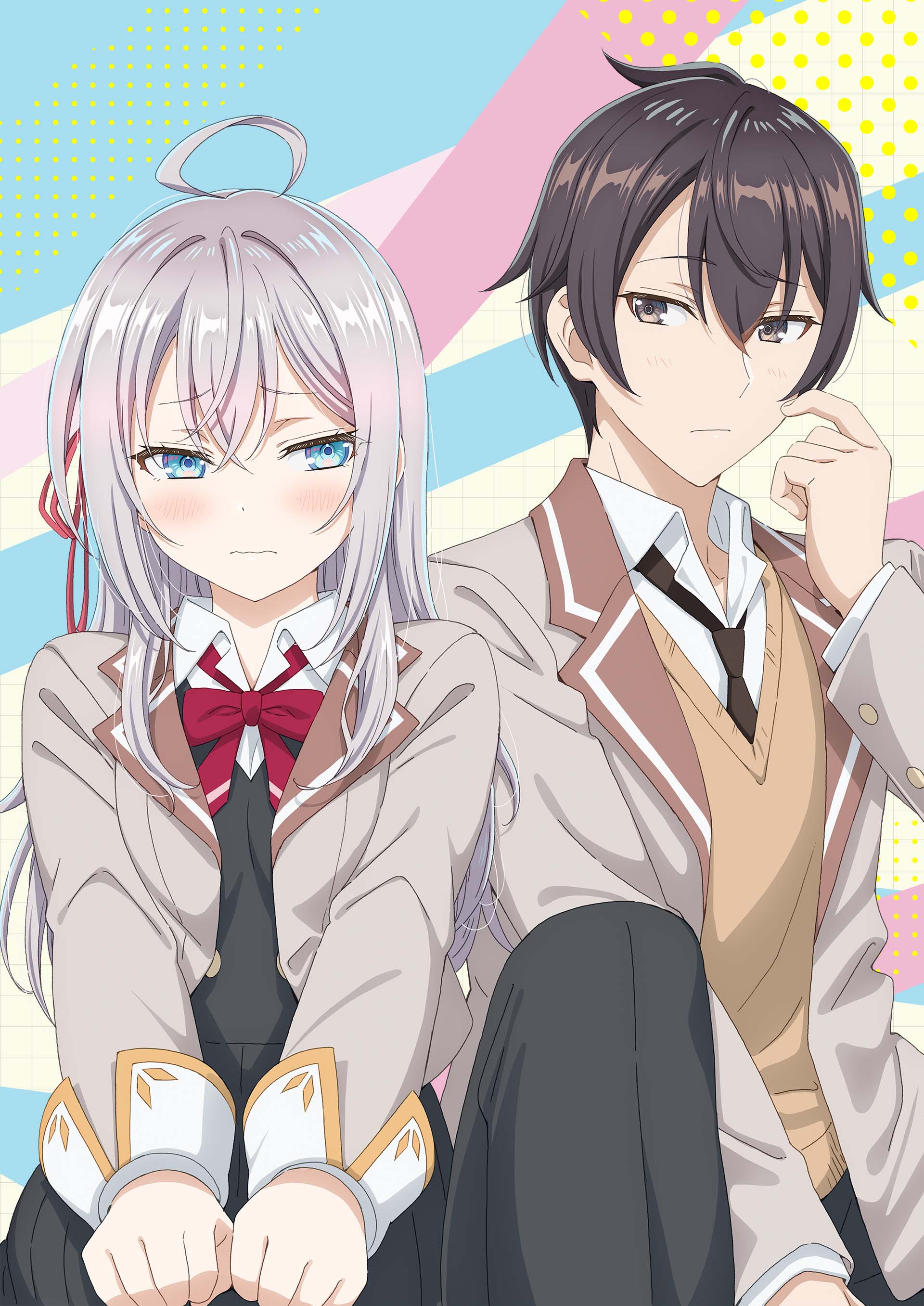
QUICK TAKE
Alya Sometimes Hides Her Feelings in Russian makes a familiar school-romance setup feel distinct through its central dramatic irony: Alya voices her private affection in Russian, unaware that Masachika understands her. The joke gives the pair an immediate spark, but the fuller appeal is how both characters use carefully maintained public personas to cover insecurity, ambition, and a desire to be understood. The student-council race gives that romantic tension a tangible direction, while the surrounding cast keeps the school world lively. Season 1 is an easy recommendation for viewers who enjoy playful romantic-comedy timing and character-driven school competition; its slow-burn relationship remains open for the officially announced Season 2.
Scope: This review covers the complete first TV season, Episodes 1–12. Crunchyroll lists twelve Season 1 episodes. Season 2 has not aired as of October 20, 2026; Crunchyroll reports that it is set for a 2027 debut. This page is a Season 1 review only.
Dreaming Anime is a Trinidad-rooted, Caribbean anime publication for fans worldwide.
A LANGUAGE GAP THAT DOES MORE THAN SET UP A GAG
The hook is delightfully simple: Alya is a sharp, popular student whose cool exterior contrasts with the Russian endearments she lets slip around her classmate Masachika Kuze. She believes the remarks are safely private; he understands them and chooses to keep that fact to himself. The audience is therefore placed in the middle of a small, recurring performance, watching one character speak more honestly than she intends and the other decide how much to reveal in return.
That dramatic irony is more durable than a one-note translation joke. Russian becomes a pocket of candour inside a school environment where status, competence, and self-control matter. Alya’s slips are funny because they puncture her poised image, but they also let the story show the difference between what she can say directly and what she is ready to admit. The premise gives ordinary exchanges a second meaning without asking the viewer to decode every scene as a puzzle.
THE TWO LEADS HIDE DIFFERENT THINGS
Alya’s disciplined student-council persona and Masachika’s deliberately low-effort reputation make them appealing opposites, but neither is simply the confident one paired with the clueless one. Her coolness is partly a shield for uncertainty; his relaxed act keeps expectations and attention at a distance. Their private-versus-public contrast creates the chemistry, while the gradual recognition of each other’s effort gives that chemistry more substance than a string of flirtatious misunderstandings.
The show is strongest when the comedy lets a reaction reveal character. A brief Russian aside can undercut Alya’s formal composure; Masachika’s restrained response can be both a joke and evidence that he is choosing his words carefully. The rhythm is light, but the repeated contrast between display and intention gives the romance a consistent emotional question: what would change if either of them stopped performing?
THE STUDENT COUNCIL RACE GIVES THE ROMANCE DIRECTION
The election and student-council responsibilities keep the plot moving beyond the leads’ mutual fascination. Alya has a visible goal to pursue, and Masachika’s decision to support her turns their relationship into a partnership with practical stakes. Campaign planning, school politics, and public challenges give them reasons to rely on one another, so affection develops alongside competence and trust rather than in a separate romantic bubble.
This structure also gives the season a clear shape: personal scenes matter because they influence how the pair work together, while the public contest tests how much of their private understanding can survive in front of other people. The competition is not just a backdrop for cute moments; it gives Alya’s ambition and Masachika’s guarded capability room to show.
AN ENSEMBLE THAT KEEPS THE SIGNALS UNSETTLED
Friends, rivals, and family members add different kinds of pressure to the central pairing. Yuki’s mischievous familiarity with Masachika and the attention of the wider student group make his low-key image harder to take at face value, while Alya’s relationships beyond the classroom expand her life past the romance. These supporting dynamics supply energy and comic misdirection without taking the story away from the two leads.
The larger cast is most effective as a source of contrast: some characters are more direct, others more strategic, and their presence makes Alya and Masachika’s reserve easier to notice. The trade-off is that rapid-fire side jokes and romantic signals can occasionally make scenes feel busy. Still, the ensemble helps the school feel like a social world rather than a stage built only for the central couple.
WHAT WORKS, AND WHAT MAY NOT
The series has a strong, instantly understandable premise, an energetic central pairing, and a useful external goal in the student-council race. Its best comedy comes from timing and character contrast, and its most satisfying scenes connect public ambition with private vulnerability. That combination makes it approachable for viewers looking for a light romantic comedy with more forward motion than a purely episodic school-life series.
The conceit can also become repetitive when a scene relies on the same secret-language reveal without adding a new emotional beat. Viewers looking for a decisive romantic resolution should know that Season 1 develops the relationship but leaves its slow-burn arc open. The show also uses suggestive dialogue and sexualized imagery, as reflected in Crunchyroll’s title-page advisory.
SEASON 1 VERDICT
Alya Sometimes Hides Her Feelings in Russian turns its language-based misunderstanding into a lively study of two students learning to read past each other’s public masks. The student-council plot gives their growing partnership direction, and the ensemble keeps the comedy in motion. The central gag occasionally risks repetition, and the season deliberately leaves the romance with room to continue, but the characters and their push-pull rhythm provide a solid reason to return. This verdict is limited to the complete twelve-episode first season.
QUICK ANSWERS
What is Alya Sometimes Hides Her Feelings in Russian about?
It is a school romantic comedy about Alya, a high-achieving student who quietly flirts in Russian with classmate Masachika Kuze, not knowing that he understands her. Their connection grows alongside a student-council campaign.
How many episodes does Season 1 have?
Season 1 has 12 episodes. This review covers all twelve and no episodes from a later season.
Has Season 2 aired?
No. As of October 20, 2026, Season 2 had not aired. Crunchyroll reported its debut is set for 2027, so this page reviews Season 1 only.
Where can I watch it?
Crunchyroll lists the series with sub and dub options. Catalogue and playback availability vary by region.
What is the official content advisory?
Crunchyroll says “Not recommended for minors under fourteen” and lists “Suggestive Dialogue” and “Sexualized Imagery.”
WHERE TO WATCH
Crunchyroll lists Alya Sometimes Hides Her Feelings in Russian with subtitle and dub options. Streaming catalogue, languages, and playback availability may vary by territory.
OFFICIAL SOURCES
The series title, synopsis, episode listings, and content advisory below are taken from official anime and streaming pages. The Season 2 status is based on Crunchyroll’s September 2026 announcement.
- Official Alya Sometimes Hides Her Feelings in Russian anime website
- Official anime story page · Season 2 information
- Crunchyroll series listing · English title, 12 Season 1 episodes, and content advisory
- Crunchyroll News · Season 2 teaser and 2027 debut announcement
Content advisory · Crunchyroll: “Not recommended for minors under fourteen.” Content Advisory: “Suggestive Dialogue, Sexualized Imagery.” This reproduces the platform’s title-page wording, not an independent rating.
RELATED SOURCE LIGHT NOVEL
Affiliate disclosure: This page contains an Amazon affiliate link. Dreaming Anime may earn a commission from qualifying purchases. Product formats, prices, and availability may vary by marketplace.